
Being sick is never fun. Add braces into the mix, and even simple things, like eating, can feel harder than they should. When you’re dealing with congestion, sore throat, nausea, or fever, you still need foods that help you recover and protect your braces.
At Smiles of Palmetto Bay, we’re here to help you stay comfortable and supported throughout your orthodontic treatment, even on sick days. This guide walks you through how to eat, clean, and care for your braces when you’re sick.
What to Eat When You’re Sick (and Wearing Braces)
When you’re under the weather, focus on foods that are soft, soothing, and easy to chew. Sick days can make your teeth feel extra tender, and gentle foods help you stay nourished without irritating your mouth.
Best foods for sick days with braces:
- Warm soups – chicken noodle, tomato, vegetable, or broth-based
- Smoothies – blended fruit, yogurt, or greens
- Applesauce
- Mashed potatoes or sweet potatoes
- Oatmeal or cream of wheat
- Scrambled eggs
- Yogurt
- Bananas
- Pasta or noodles
- Soft ice cream or frozen yogurt
If your teeth feel extra sore, stick with very soft foods like broth, pudding, yogurt, mashed veggies, or smoothies until things improve.
Foods to Avoid When You’re Sick with Braces
Even when you’re sick, it’s important to avoid anything that could damage your brackets or wires.
Avoid:
- Crunchy foods like chips or popcorn
- Sticky foods or chewy cough drops
- Hard-to-bite foods like crusty bread or nuts
- Sugary drinks like soda or sweet tea
- Extremely hot foods or drinks
When in doubt, Dr. Ross and Dr. Iglesias recommend choosing soft, soothing, simple options.
If You Wear Aligners, Does This Still Apply?
Even though this guide focuses a lot on braces, aligner patients still face many of the same challenges when they’re sick, just with a little more flexibility at mealtimes.
Eating While Sick with Aligners
Aligners make sick days a little easier because you take them out before eating. That means you don’t have to avoid crunchy or chewy foods, as long as your trays aren’t in. Just remove them before every meal, as heat and pressure can warp the plastic. If your teeth feel tender from switching trays or from being sick, stick to softer foods like soups, scrambled eggs, yogurt, or mashed potatoes.
Rinse & Hydrate
Even with aligners, you should avoid sugary drinks while wearing your trays since sugar can get trapped against your teeth. Illness increases bacteria in your mouth, so rinse and clean your aligners more often, and always brush after meals before putting them back in. Staying hydrated also helps reduce dry mouth, which is more common during sickness and can feel worse with aligners.
Handling Nausea or Vomiting
If you’re dealing with stomach issues, rinse your mouth and aligners with cold water right away. Wait about 30 minutes before brushing so you don’t risk spreading stomach acid across your enamel, then clean your aligners as usual.
Wear Time During Illness
If you’re sleeping more or feeling run down, don’t worry too much about perfect wear time for a day or two. Aim for 20–22 hours when you can, and return to your normal routine once you start feeling better.
Practical Hygiene Tips for Caring for Braces or Aligners When You’re Sick
When you’re sick, your mouth goes through changes you might not notice right away. You may breathe through your mouth more, drink fewer fluids, snack more often, or skip parts of your routine because you’re tired. All of this can dry out your mouth and increase the bacteria that cause bad breath, gum inflammation, and cavities, especially around braces and under aligners. These simple habits help keep your smile protected while your body fights off illness.
Brush More Often (and More Carefully)
Try to brush at least twice a day, and add a third session if you can manage it. Braces trap food particles around brackets and wires, and aligners can seal bacteria against your teeth if you put them back in without brushing.
If your mouth is sensitive, use a soft-bristled toothbrush, warm water, and small circular motions. You can even switch to a mild-flavor toothpaste if stronger mint flavors feel overwhelming when you’re congested or nauseous.
Rinse Throughout the Day
That dry, sticky feeling in your mouth during a cold or flu means your saliva isn’t doing its usual job of washing away bacteria. Rinsing is one of the easiest ways to reduce buildup, especially when brushing feels like a lot of effort.
Warm saltwater rinses help soothe irritated gums, a fluoride rinse protects your enamel, and plain water keeps things fresh if your stomach is off. Even a quick rinse after meals can prevent food from sticking around braces or getting trapped under aligners.
Floss Daily (Even If You Don’t Feel Like It)
Flossing removes plaque and food debris that brushing alone can’t reach. When you’re sick, inflammation in your gums can get worse if plaque builds up, making your mouth feel even more uncomfortable.
If traditional flossing feels like too much, switch to:
- Orthodontic flossers
- Pre-threaded floss picks
- A water flosser
- Interproximal brushes for tight spots
Anything that helps remove buildup is better than skipping completely.
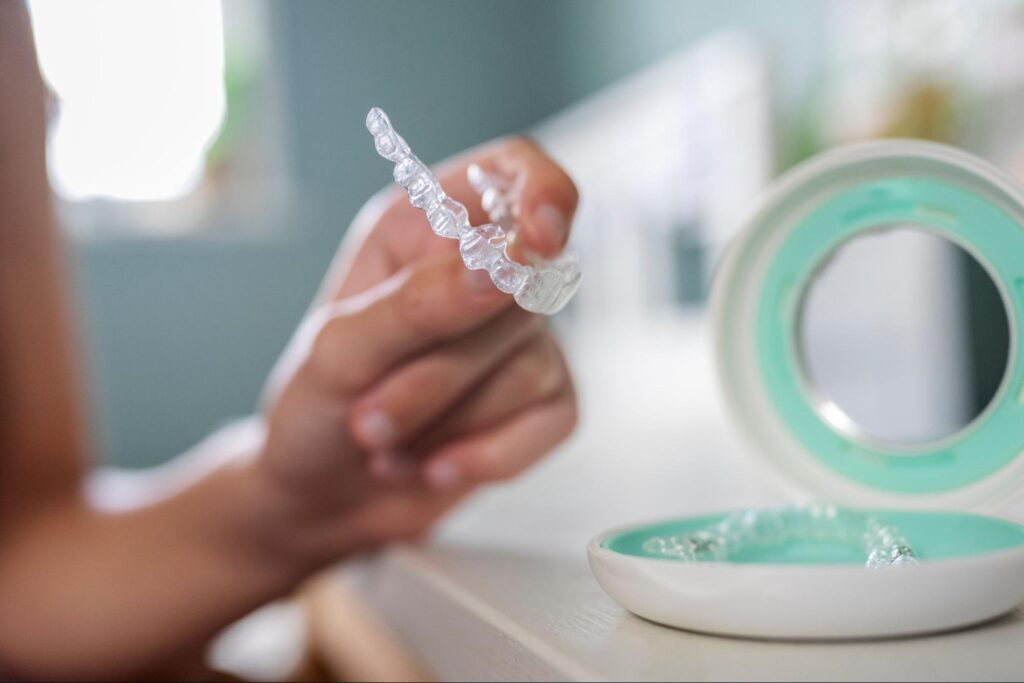
Keep Aligners Extra Clean If You Wear Them
Sick-day bacteria multiply quickly in warm, moist places, including inside aligner trays. To avoid odors, staining, or a filmy buildup, rinse your aligners every time you remove them. Brush them gently with a soft brush and cool water, and let them fully dry before storing them.
If you’re taking cough syrup, throat spray, or lozenges, make sure you clean your aligners before putting them back in, many of these products have sugar that can become trapped against your teeth.
Stay Hydrated to Protect Your Mouth
Drinking water does more than help your body recover, it also keeps your mouth healthier. Hydration supports saliva flow, reduces the risk of dry mouth, and helps prevent the sticky plaque that builds up quickly around brackets.
If you’re tired of plain water, try warm herbal tea without added sugar. If you’re drinking electrolyte beverages, rinse with water afterward to prevent sugar from lingering on your teeth.
Soothe Irritated Gums or Lips
Feeling under the weather can make your mouth more sensitive. Braces may rub against your cheeks or lips if you’re dehydrated or lying down more often. Orthodontic wax, warm saltwater rinses, and a gentle lip balm can help protect irritated areas.
If a wire or bracket causes discomfort, you can temporarily cover it with wax until your orthodontist can address it.
Switch to a New Toothbrush After You Recover
Once you’re feeling like yourself again, swap your toothbrush or brush head. Germs can linger in the bristles even after rinsing, and a fresh brush helps you start clean after your illness passes.
How to Prevent Illness When You Have Braces or Aligners
You can’t avoid every sick day, but small, consistent habits make a big difference in keeping both your body and your smile healthier. Orthodontic appliances can trap bacteria more easily, so taking care of your mouth can actually support your overall wellness.
Wash Your Hands Often
This reduces the germs you transfer to your mouth when adjusting elastics, removing aligners, or brushing your teeth.
Keep Orthodontic Supplies Clean
Rinse aligner cases, water flosser tips, toothbrushes, and interproximal brushes regularly. These tools come into close contact with your mouth, so keeping them clean helps prevent bacteria buildup.
Drink Plenty of Water
Hydration supports your immune system and helps your mouth fight off dry mouth, plaque, and irritation around braces.
Stay Consistent with Brushing and Flossing
A clean mouth lowers inflammation and reduces your body’s overall bacterial load, giving your immune system less work to do.
Avoid Sharing Food, Drinks, or Utensils
Kids and teens tend to share without thinking, but this is one of the fastest ways to spread viruses and bacteria.
A few simple habits go a long way, and the healthier your mouth is, the easier it is for your body to stay healthy, too.

Take the Next Step Toward a Healthier, Happier Smile
If you’re unsure how to eat, clean, and care for your braces or aligners while sick, the best thing to do is call our team at Smiles of Palmetto Bay. We’re here to guide you through every step of orthodontic care, on healthy days and sick days alike.
We can’t wait to make you smile!