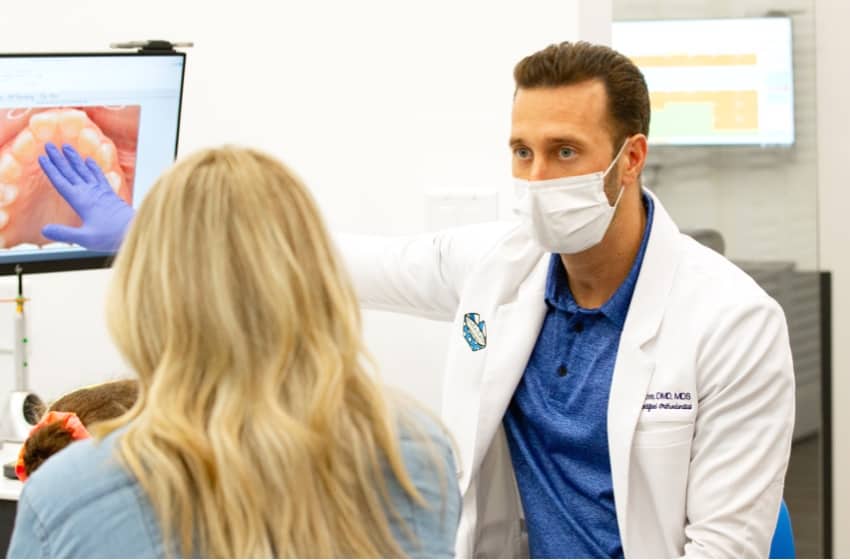
Deciding between braces and clear aligners for your teen starts with two facts. Braces are fixed brackets and wires bonded to the teeth. Clear aligners are removable trays worn 20 to 22 hours a day. Both apply gradual, controlled force, and both deliver excellent results when matched to the right case.

Braces vs. Clear Aligners for Teens: What Are the Options?
Your teen has three main options at Smiles of Palmetto Bay:
- Metal braces. Small brackets bonded to each tooth, connected by an archwire. Today’s metal braces are lighter and more comfortable than the ones you may remember.
- Clear braces. Tooth-colored ceramic brackets that blend in with your natural smile. They move teeth the same way metal braces do.
- Clear aligners. A series of clear, removable trays custom-made from a digital scan of your teenager’s teeth.
So how do you choose? The decision usually comes down to three things: how complex the bite is, how your teen lives day to day, and how consistently they’ll wear removable trays.
Adolescence is one of the most common windows for orthodontic care. Once most permanent teeth have come in, Dr. Greg Ross can correct crowding, spacing, and bite problems while the jaws are still growing and responsive.
A quick reality check for parents: both options work. Neither is a shortcut. The right choice is the one that fits your teen’s teeth and habits, and that’s exactly what a free ortho consult sorts out.
How Braces and Clear Aligners Actually Move Teeth
Braces and clear aligners both move teeth with steady, controlled force. Braces use brackets bonded to each tooth plus an archwire Dr. Greg Ross adjusts every 4 to 8 weeks. Clear aligners use custom trays, each worn about one to two weeks, that shift teeth in small planned steps.
When families weigh braces vs. clear aligners for teens, that single difference in how force gets delivered explains most of what follows, from daily habits to how often you visit us.
How Do Braces Work?
- Bonding. Brackets are attached to the front of each tooth. Nothing is removed and nothing is drilled away.
- Archwire pressure. The wire wants to return to its original shape, so it applies gentle, continuous force to the teeth.
- Adjustments. At each visit, Dr. Ross changes or tightens the wire to guide the next stage of movement.
- Add-ons when needed. Elastics, expanders, and other attachments let braces handle stubborn rotations, deep bites, crossbites, and larger jaw corrections.
Because braces are fixed, they work around the clock. Nothing to remember, nothing to lose.
How Do Clear Aligners Work?
- Digital scan. A quick, comfortable scan replaces putty impressions and creates your teen’s custom plan.
- 3D planning. Dr. Ross maps every movement in advance, and you can often preview the projected result before your teen gets started.
- Tray series. Each tray is slightly different from the last, so teeth shift in sequence.
- Attachments. Small tooth-colored bumps are sometimes bonded to teeth to give the trays better grip for tricky movements.
The catch with aligners is simple. They only work while they’re in the mouth. Trays come out to eat and brush, then go right back in.
Typical teen treatment runs about 12 to 24 months with braces and often 12 to 18 months for many aligner cases. Complexity drives that range more than appliance type does.

Benefits of Each Option for Teenagers
Both choices improve function, bite health, and long-term cleanability. They’re not just cosmetic. Here’s where each one shines.
Why Do Teens and Parents Choose Braces?
- They work 24/7. No wear-time worries and no trays left in a lunchroom.
- They handle complex cases. Severe crowding, big bite corrections, and stubborn rotations are braces territory.
- Color-change elastics are fun. Many teens genuinely look forward to picking new colors at each visit.
- Clear braces are subtle. Tooth-colored ceramic brackets that blend in give older teens a lower-profile option with fixed-appliance strength.
- Less daily responsibility. Brush, floss, avoid hard and sticky foods, show up for visits.
Why Do Teens and Parents Choose Clear Aligners?
- They’re nearly invisible. That subtle look matters to teens who feel self-conscious.
- They come out for sports, band, and photos. Contact practice, a trumpet solo, prom pictures. Trays pop out.
- Brushing and flossing stay normal. No threading floss around wires.
- No food restrictions. Take the trays out, eat what you want, brush, put them back.
- Fewer surprise visits. No brackets to break and no wires to poke.
One honest note: aligners shift responsibility onto your teen. Some 13-year-olds handle that beautifully. Others do better with braces, and that’s completely normal.
Side-by-Side Comparison: Braces vs. Clear Aligners for Teens
| Factor | Metal or Clear Braces | Clear Aligners |
|---|---|---|
| Appearance | Visible; clear braces blend with tooth color | Nearly invisible |
| Removable? | No, bonded to teeth | Yes, removed to eat and brush |
| Daily wear time | Automatic, always working | 20 to 22 hours per day required |
| Comfort | Temporary pressure after adjustments; wires can irritate cheeks early on | Temporary pressure with each new tray; smooth plastic edges |
| Typical treatment time | 12 to 24 months | 12 to 18 months for many cases |
| Office visits | Every 4 to 8 weeks for adjustments | Every 6 to 10 weeks for progress checks |
| Hygiene | Requires careful brushing and flossing around brackets | Normal brushing and flossing, plus tray cleaning |
| Food rules | Avoid hard, sticky, and chewy foods | No restrictions when trays are out |
| Sports and instruments | Mouthguard recommended | Trays can be removed |
| Best for | Complex bites, severe rotations, teens who may forget trays | Mild to moderate crowding or spacing, consistent routines |
| After treatment | Retainer required | Retainer required |
Read that last row twice. Retainers hold your results no matter which option you pick. Teeth drift for life, so retainer wear is part of the deal.
Complex rotations, significant crowding, and larger bite corrections often favor braces. Mild to moderate crowding or spacing is frequently well suited to clear aligners. Plenty of cases fall in the middle, where either option can work and your teen’s preference becomes the deciding factor.
How Much Does Teen Orthodontic Treatment Cost?
The cost of teen orthodontic treatment depends on four main things: how complex the case is, how long treatment takes, which appliance you choose, and any extras like expanders or retainers. Metal braces and clear aligners often land in a similar range. Clear braces may run slightly higher.
| Cost Driver | Why It Matters |
|---|---|
| Case complexity | More movement means more appointments and more materials |
| Treatment length | Longer plans require more visits and monitoring |
| Appliance type | Metal braces and clear aligners are often comparable; clear braces may cost a bit more |
| Number of aligner trays | Larger tray series and refinement trays add to the total |
| Extra appliances | Expanders, elastics, and space maintainers affect the fee |
| Retainers | Included in most plans; replacements are billed separately |
A few things worth knowing before you compare quotes:
- Orthodontic insurance benefits are usually a lifetime maximum, not an annual one. Once it’s used, it’s used.
- HSA and FSA dollars can typically be applied to orthodontic care.
- Payment plans and family courtesies often bring the monthly number down to something manageable.
We don’t quote numbers online, because a real number requires a real exam. Your free consult at Smiles of Palmetto Bay includes an exact quote before you commit to anything.
Which Teens Are Good Candidates for Each?
Not every teen is an equally good fit for both options. Here’s how Dr. Ross thinks about it.
Who Is Better Suited to Braces?
- Complex bite problems like deep bites, open bites, or crossbites
- Severe rotations or teeth that need significant repositioning
- Teens who lose retainers, forget mouthguards, or need reminders for daily routines
- Cases where elastics or an expander will do heavy lifting
- Younger teens still going through big growth changes
Who Is Better Suited to Clear Aligners?
- Mild to moderate crowding or spacing
- Teens with solid daily routines who manage their own hygiene and homework
- Athletes in contact sports and wind instrument players
- Teens motivated by a discreet look, especially during high school photos or before a big event
- Families who want fewer food restrictions and simpler brushing
What Readiness Signs Should You Look For?
Ask yourself: Does your teen remember their phone charger? Keep track of a mouthguard? Finish assignments without daily reminders? Those small habits predict tray wear better than age does.
Most teens are ready for orthodontic care once most permanent teeth have erupted, commonly between ages 11 and 14. According to the American Association of Orthodontists, a first orthodontic check-up is recommended around age 7, which helps Dr. Ross flag issues early and time treatment well.
Only an exam with X-rays and a digital scan can confirm which option truly fits. Photos on a phone can’t measure a bite.

Why Families Trust Our Team
Both of our orthodontists are board-certified, a credential that requires voluntary testing beyond dental school and residency. Dr. Cassandra Iglesias completed a 3-year orthodontic residency, and Dr. Greg Ross leads orthodontic care for children, teens & adults at our fun, modern office. His board certification reflects the same path: specialty orthodontic residency training after dental school, followed by voluntary board examinations he chose to sit for. Dr. Ross also volunteers on the Craniofacial team at Nicklaus (Miami Children’s) Hospital.
Our team has far more clear aligner experience than most orthodontists, and we use digital scanning instead of putty impressions for every case. Se habla español, and virtual consults are available if getting to the office is tough.
Frequently Asked Questions About Teen Braces and Aligners
Are clear aligners as effective as braces for teens?
For many teen cases, yes. Clear aligners can correct mild to moderate crowding, spacing, and several bite issues when worn 20 to 22 hours a day. Braces still lead for complex rotations, significant crowding, and larger bite corrections. Dr. Ross will tell you honestly which option your teen’s case calls for.
How long does teen orthodontic treatment take?
Most teen treatment runs 12 to 24 months. Braces cases often fall toward the middle or upper end of that range, while many aligner cases finish in 12 to 18 months. Case complexity matters more than appliance type, and consistent aligner wear keeps timelines on track.
Do clear aligners feel more comfortable than braces?
Both create temporary pressure as teeth move, usually for a day or two after a new tray or an adjustment. Aligners have smooth plastic edges, so they avoid the cheek irritation that wires and brackets can cause in the first weeks. Orthodontic wax and soft foods help either way.
Can teens play sports with braces?
Absolutely. Your teen just needs an orthodontic mouthguard, which fits over brackets and protects both the teeth and the appliance. With clear aligners, trays come out before contact sports and go back in afterward. Athletes often like that flexibility, though wear time still needs to add up.
What happens if my teen loses an aligner?
Have them put the previous tray back in right away, then call our office. Losing a tray isn’t a crisis, but going without one lets teeth drift back. Depending on where your teen is in the series, we’ll either move them to the next tray or order a replacement.
Can we switch from clear aligners to braces mid-treatment?
Yes. If trays aren’t being worn consistently or the case turns out to need more control than planned, Dr. Ross can transition your teen to braces without starting over. The reverse happens too. Some teens finish in braces and then use aligners for final detailing. Either way, your teen keeps moving toward the smile of your dreams without losing the progress already made.
The fastest way to settle the braces vs. clear aligners for teens question is a real exam. Bring your teen in, let them see the scan of their own teeth, and get a straight answer with an exact quote. Dr. Ross walks you and your teen through the plan step by step, so you leave knowing what treatment involves and what it costs.
Our fun, modern office welcomes children, teens & adults, and your free ortho consult comes with no obligation. Schedule a free consult or email us at Info@smilesofpalmettobay.com.
Get ready to smile!